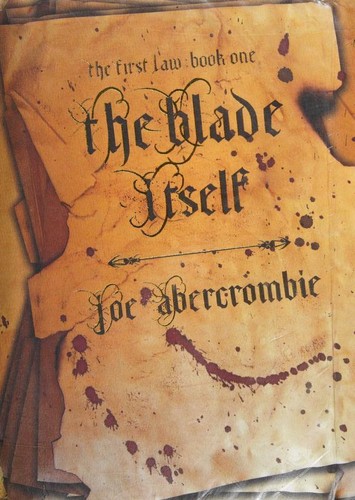
I went into The Blade Itself expecting standard grimdark, everyone’s cruel, nobody wins, the usual. What I did not expect was to end up genuinely fond of Sand dan Glokta, a crippled royal torturer who spends half his internal monologue mocking his own bitterness, and to realize somewhere around book two that Abercrombie had built an entire trilogy around subverting the fantasy archetypes he sets up in book one specifically so he could pull the rug out later.
Logen Ninefingers is the obvious bait, gruff barbarian with a code, exactly the character you’d expect to be the reluctant hero of a standard epic fantasy, and the trilogy spends three books slowly revealing how much of that code is self-mythology he’s telling himself to avoid reckoning with what he actually is. Jezal’s arc does something similar from the opposite direction, vain pretty-boy nobleman who you’re set up to dislike, given genuine growth, and then Abercrombie yanks even that away from him by the end in a way that made me actually angry reading it, which I mean as the highest compliment.
Glokta’s chapters are where the prose is doing the most interesting work, the italicized internal commentary running underneath his dialogue, sarcastic and self-lacerating, is some of the sharpest character voice I’ve read in fantasy, and it never once feels like a gimmick even after three books of it.
The magic system is deliberately underexplained for most of the trilogy, which some readers find frustrating, I found it effective, it keeps the wizards genuinely unsettling rather than just another power system to min-max. Combat can run long in places, a few of the middle-book battle sequences could’ve been trimmed without losing anything.
But the character work alone earns this five stars from me. Abercrombie sets up every fantasy comfort you’re expecting and then very deliberately declines to give it to you.