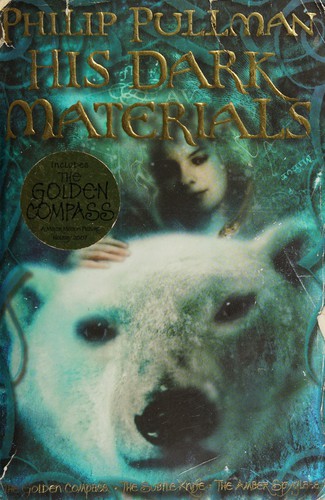
I read Northern Lights as a kid the way most people my age probably did, for the armored bears and the daemons and Lyra being a genuinely great chaotic-good child protagonist, and I finished the reread this year as an adult mostly for the same reasons plus a much sharper appreciation for exactly how furious Pullman actually is at institutional religious authority the whole way through, which flew right past ten-year-old me and lands very differently now.
The daemon concept alone is one of the best pieces of world-building I’ve encountered, the idea that your soul walks around outside your body as an animal companion that settles into a fixed form at puberty, tied directly to who you’re becoming, is doing philosophical and emotional work on nearly every page, and the sequence in book one where children are being severed from their daemons is still genuinely upsetting to read as an adult in a way it wasn’t when I was young enough to not fully register what severance meant.
Will’s introduction in The Subtle Knife shifts the whole trilogy’s register, more grounded, more grief-driven given what’s happening with his mother and missing father, and the multiverse-hopping knife itself is a fantastic device precisely because Pullman keeps showing you the cost of using it, every cut risks letting something terrible through, nothing about the power is free.
The Amber Spyglass is the most divisive book of the three among people I’ve talked to, the theological ambition goes fully explicit by the end, angels and the death of God-adjacent figures and all, and some readers find that shift too didactic compared to the first two books’ more implicit critique. I landed on the opposite side, I think Pullman earns the swing by that point and the ending’s quiet devastation, Lyra and Will’s fate, still got me even knowing it was coming.
A genuine landmark of the genre. Five stars, and it holds up to rereading better than almost anything else from my childhood shelf.